Why Is My Garage Floor Peeling After an Epoxy Coating?
by Loral Concrete Slab Solutions
You invested in an epoxy garage floor because you wanted a surface that looked great, held up to daily use, and was easy to maintain.
Then a few months or a few years later, you start noticing peeling.
Maybe it’s happening near the garage door. Maybe it’s showing up where you park your vehicle every day. Sometimes it starts as a small area and gradually spreads across the floor.
If you’re dealing with a peeling garage floor epoxy coating, you’re not alone.
The good news is that peeling doesn’t happen randomly. There is usually an underlying reason, and understanding the cause is the first step toward a lasting solution.
Epoxy Doesn’t Usually Fail on Its Own
When properly installed over a well-prepared concrete surface, epoxy flooring can provide years of performance.
In many cases, the coating itself is not the problem.
What often causes peeling is an issue with the concrete underneath, the preparation process before installation, or environmental conditions that affect adhesion.
That is why simply applying another coat of epoxy over a peeling area rarely fixes the problem for long.
Poor Surface Preparation Is One of the Most Common Causes
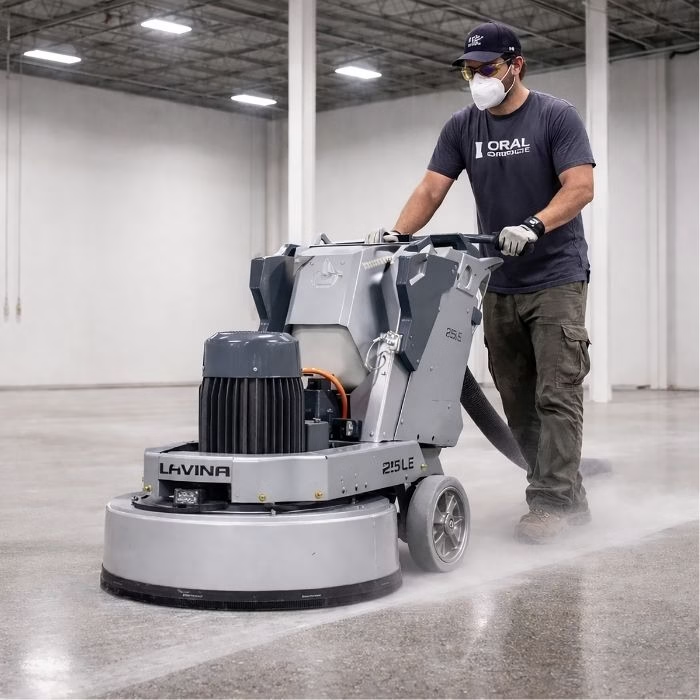
Before any epoxy coating is installed, the concrete needs to be properly prepared.
This is one of the most important steps in the entire process.
Concrete surfaces often contain dirt, oils, old coatings, curing compounds, and other contaminants that can interfere with adhesion. If those materials are not removed, the epoxy may bond to the contamination instead of the concrete itself.
Over time, that weak bond can begin to fail, causing sections of the coating to lift and peel away.
Surface preparation is not always visible once the project is finished, but it plays a major role in how well the floor performs years later.
Moisture Can Cause Epoxy Coatings to Separate
Many homeowners are surprised to learn that moisture can travel through concrete.
Concrete may look solid, but it is naturally porous. If moisture is moving through the slab, it can create pressure beneath the coating.
Eventually, that pressure can cause bubbling, lifting, or peeling.
This issue is especially important in coastal areas like Wilmington and surrounding communities where humidity and moisture conditions can be more challenging than in other parts of the country.
If moisture is contributing to the problem, simply recoating the floor may not solve it.
The source of the moisture needs to be identified first.
The Concrete Surface May Be Weak
Sometimes the epoxy is actually bonded correctly.
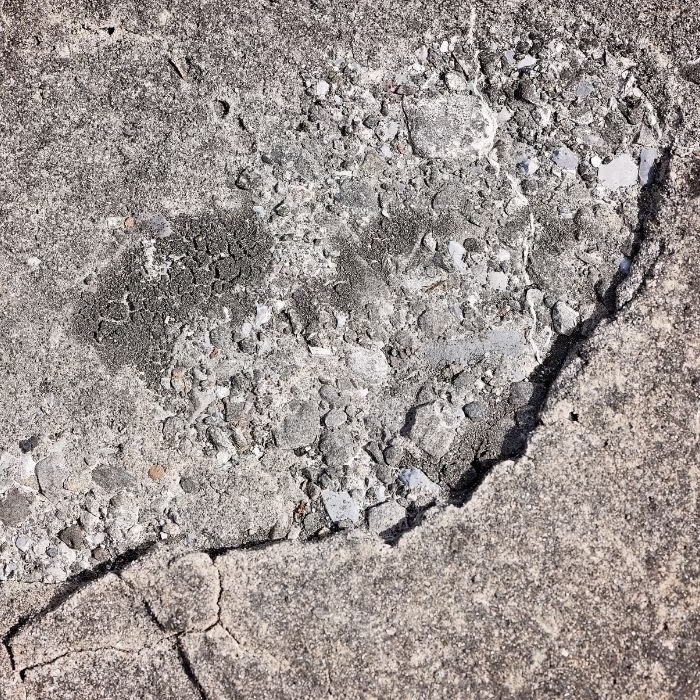
The problem is that the top layer of concrete underneath is weak.
When this happens, the coating remains attached to the concrete, but the concrete itself begins to break apart. The result can look like peeling epoxy when the real issue is deterioration of the concrete surface.
This is one reason professional evaluation is so important. What appears to be a coating failure may actually be a concrete problem.
Hot Tires Can Create Problems
If you’ve ever noticed peeling where your vehicle is parked, hot tire pickup may be part of the issue.
As tires heat up during driving, they can soften slightly. When a vehicle is parked on a garage floor, the heat transfers to the coating.
If the epoxy system was not properly installed or fully bonded to the concrete, the tires can sometimes pull sections of the coating loose when the vehicle moves.
This type of damage often appears in parking areas first before spreading to other parts of the floor.
Previous Coatings Can Cause Adhesion Issues
Not every garage floor starts with bare concrete.
Some floors have old paint, sealers, coatings, or previous repair products already on the surface.
If those materials are not completely removed before a new epoxy system is installed, adhesion problems can develop over time.
The new coating is only as strong as the surface beneath it.
When older materials begin to fail, the epoxy attached to them can fail as well.
Not All Epoxy Systems Are Created Equal
Garage floor coatings vary significantly in quality.
Some products sold as epoxy coatings contain lower solids content and provide thinner protection than professional-grade systems.
While lower-cost materials may look good initially, they often have a shorter lifespan and can be more susceptible to peeling and wear.
The quality of the materials matters, but installation and preparation are just as important.
Even the best coating system can fail if the concrete underneath is not properly evaluated and prepared.
Why Spot Repairs Don’t Always Work
When homeowners first notice peeling, it’s tempting to repair only the damaged section.
Sometimes that approach makes sense. Other times, it only delays a larger issue.
If the root cause is moisture, poor preparation, or a problem with the concrete itself, new coatings applied over isolated areas may eventually fail for the same reason.
That is why it is important to understand why the peeling started before deciding on the repair strategy.
Understanding the Cause Before Choosing the Fix
Every garage floor is different.
Some peeling issues are relatively minor. Others point to larger concerns involving moisture, slab conditions, or previous installation methods.
The most effective solution starts with identifying what caused the failure in the first place.
At Loral Concrete Slab Solutions, we believe in diagnosing the problem before recommending a repair. Our goal is not simply to cover up the damage. We want to help homeowners restore a floor that will continue performing well for years to come.
When the cause is addressed correctly, the result is a stronger, longer-lasting flooring system and fewer surprises down the road.